
Blog > Selling Next Spring? The Work Starts in the Fall: An Ottawa Seller's Timeline
Selling Next Spring? The Work Starts in the Fall: An Ottawa Seller's Timeline
by
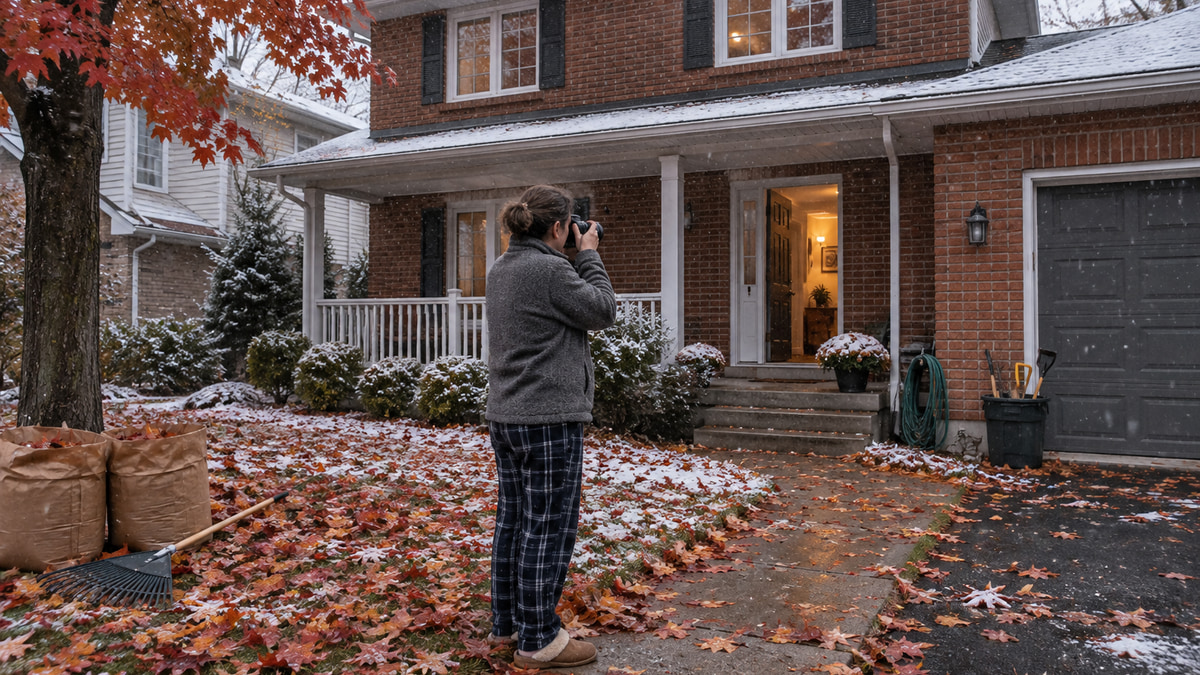
If you plan to list in Ottawa next spring, the useful work starts in the fall. Not because the market needs you yet, but because a few things only work before the snow or take months to finish: exterior photos and outside repairs while you can still see the roof, the grading and the lawn; a radon test that takes at least three months through the heating season; the City permit records that take time to pull; and the paperwork that is easier to gather in November than in the week your listing goes live.
Interior paint, staging, pricing and the launch date belong to late winter. Fall is for the things winter takes away.
Why start in October if the listing is months away?
A spring listing looks simple from a distance: clean the house, take photos, go live when the snow melts. The catch is that snow hides the things buyers and inspectors care about most, and some of the work you would want done cannot be done in February.
- Once there is snow on the ground you cannot photograph the exterior properly, and nobody can see the roof, the eavestroughs, the grading, the driveway or any settlement around the foundation.
- The contractors who can fix those things in October are harder to book in March, when every other spring seller is calling them.
- A radon result you can show a buyer takes time. Health Canada recommends a long-term measurement, ideally during the heating season, and a minimum of three months. Start it in late October or November and it is back before you list.
- If your sale closes between January 1 and April 30, Ottawa's Vacant Unit Tax declaration is the seller's job, and the buyer's lawyer will likely ask for proof it was filed.
None of this means you have to decide today that you are selling. It means fall is the cheap time to find out what you are dealing with, while every option is still open.
October and November: do what the snow will stop
Take the exterior photos before the first lasting snow
Buyers see your front elevation before they see anything else. A house photographed with the lawn, gardens and trees looking like themselves is a different listing from the same house shot in March slush. If we are working together, I arrange exterior photography while the yard still looks good and hold those photos for the spring launch. If you are not there yet, take your own wide shots of the front and back in good afternoon light, so there is something usable if the weather turns early.
Walk the outside the way an inspector would
Look at the roof from the ground, or from a ladder if you are comfortable on one: lifted shingles, moss, the flashing around vents and chimneys. Clear the eavestroughs and make sure downspouts carry water away from the house. Check that soil and interlock slope away from the foundation. Note cracks, soft spots in decks and fences, and anything a buyer's inspector would photograph. The point is not to fix everything. It is to know in October what a buyer will find in April, and to decide calmly what is worth doing. If you want a sense of what inspectors actually flag, what a home inspection covers and what it misses walks through it.
Rural, waterfront and older homes
If the house is outside the urban core, a septic system, a well or a wood stove changes the fall list. Septic inspections and pumping, water sampling and wood-burning appliance inspections are much easier before the ground freezes, and buyers, their lenders and their insurers often ask about them. Book those now rather than hoping for a thaw in March.
Start the radon test
Put a long-term radon detector on the lowest level of the house that people actually use and leave it in place through the winter. Health Canada's measurement guide calls for a long-term test, ideally in the heating season, with three months as the minimum. A low result is a clean answer for any buyer who asks. A high result gives you time to have a mitigation system installed and retested before anyone sees the house. Why the radon test does not fit inside a deal is exactly why fall is the window to do it.
Ask the City for your permit records
The City of Ottawa's Access to Building Permit Records program lets a current owner request copies of the permit application, the permit, plans, inspection reports, the occupancy permit and any outstanding orders for their property. The City's published target for a records search is about ten business days, depending on how complex it is. If a previous owner finished the basement or built the deck and never closed out the permit, you want to know in the fall, not when a buyer's lawyer raises it during the conditional period.
December and January: paperwork, decisions and the slow jobs
Gather what a buyer will eventually ask for
- A survey, if you have one, and any permits or receipts for renovations.
- Warranties and manuals for the furnace, roof, windows and appliances.
- Twelve months of heating and hydro bills. Buyers ask, and a real number beats a guess.
- Contracts for anything rented, such as a hot water tank or water softener, including what it costs to buy out or transfer.
- If it is a condo, the status certificate timing and the building's rules on showings and signs.
- A call to your lender about the discharge or penalty on your mortgage and whether it can be ported to the next home.
Decide whether you sell first or buy first
For most Ottawa sellers this is the real decision, and it is better made in January than in a rushed week in April. Sell first or buy first goes through the trade-offs, including what bridge financing does and does not solve.
Use the winter for the indoor jobs
Declutter one room at a time. Fix the small things that a buyer notices and files under neglect: loose handles, scuffed trim, tired caulking, the light that never worked. Leave paint until you know your launch window, so fresh walls do not have time to pick up marks. The pre-listing checklist covers the general list of what to tackle inside.
If you own in Ottawa: file the Vacant Unit Tax declaration early
Ottawa's declaration period opens in January and the declaration is due by the interim tax due date, with late declarations accepted until April 30 and a $250 late fee. The City's guidance is clear that when a closing falls between January 1 and April 30, the vendor must complete the declaration, and that a purchaser's lawyer may ask for the confirmation email, a statutory declaration at closing, or even a holdback. File it as soon as the portal opens and keep the confirmation with your sale documents. If the house has been sitting empty, read how the Vacant Unit Tax works when you sell before you list, because the exemptions are specific.
February and March: the last six weeks before launch
This is when a spring listing actually gets built. Paint and staging go in once the launch date is set. Interior photos are taken when the house is at its best, and the exterior photos from the fall are what goes into the listing. Pricing is settled on current sales, not on what the market was doing in October.
One job people miss: after the first real thaw, walk the house again. Look for new staining on ceilings under the roofline, water in the basement, and ice damage at the eaves. A leak that showed up in February is far better found by you in March than by a buyer's inspector in April.
| When | What it is for | What waits |
|---|---|---|
| October and November | Exterior photos, outside inspection and repairs, septic or well checks, radon test started, permit records requested | Paint, staging, pricing |
| December and January | Documents gathered, sell-first or buy-first decision, Vacant Unit Tax declaration filed, indoor repairs and decluttering | Interior photos, launch date |
| February and March | Paint, staging, interior photos, pricing on current sales, post-thaw walk-through, launch | Nothing. This is launch. |
Start this fall, in this order
- Take or arrange exterior photos before the first lasting snow.
- Walk the roof, eavestroughs, grading, foundation, decks and fences and write down what you find.
- Book septic, well or wood-stove inspections if the property has them.
- Start a long-term radon test on the lowest lived-in level.
- Request your building permit records from the City of Ottawa.
- Pull together survey, permits, warranties, utility bills and rental contracts.
- Decide sell first or buy first, and talk to your lender about the mortgage.
- In January, file the Vacant Unit Tax declaration and keep the confirmation.
Questions Ottawa sellers ask about starting early
Is it too early to talk to an agent in October?
No. A fall walk-through is the cheapest advice you will get. It tells you what to fix, what to leave alone and roughly what the house is worth in the current market, before you spend a dollar. There is no obligation attached to a conversation, and nothing about it commits you to a listing date.
Should I just list in winter instead?
Sometimes that is the right call. Winter listings usually face less competition and the buyers who are out in January tend to be serious. But if your house shows best with the yard, the trees and the light, and you want exterior photos that reflect that, fall preparation with a spring launch is usually the stronger plan. The timing is a conversation, not a rule.
What if the radon result comes back high?
Health Canada's guideline is 200 becquerels per cubic metre, and above that it recommends reducing the level. The usual fix is a mitigation system installed by a certified professional, followed by a retest. Finding that out in January leaves time to deal with it quietly. Finding it out during a buyer's conditions does not.
Thinking about a spring listing in Ottawa or along the 416 corridor?
Send me the address and your rough timing, and I will tell you what I would do this fall, what can wait, and what the house is likely worth right now. Get in touch. No pressure either way.
Sources: Health Canada, Guide for Radon Measurements in Residential Dwellings; City of Ottawa, Understanding the Vacant Unit Tax; City of Ottawa, Access to Building Permit Records. Health Canada and City of Ottawa pages checked October 15, 2026.
This is general information about preparing an Ottawa home for a spring sale, not legal, tax, health or technical advice. Deadlines, rules and exemptions are set by the City and Health Canada and can change. Your lawyer, your lender and the relevant certified professionals are the ones who can confirm what applies to your property.