
Blog > Radon When Buying or Selling in Eastern Ontario: Why the Test Doesn't Fit Inside the Deal
Radon When Buying or Selling in Eastern Ontario: Why the Test Doesn't Fit Inside the Deal
by
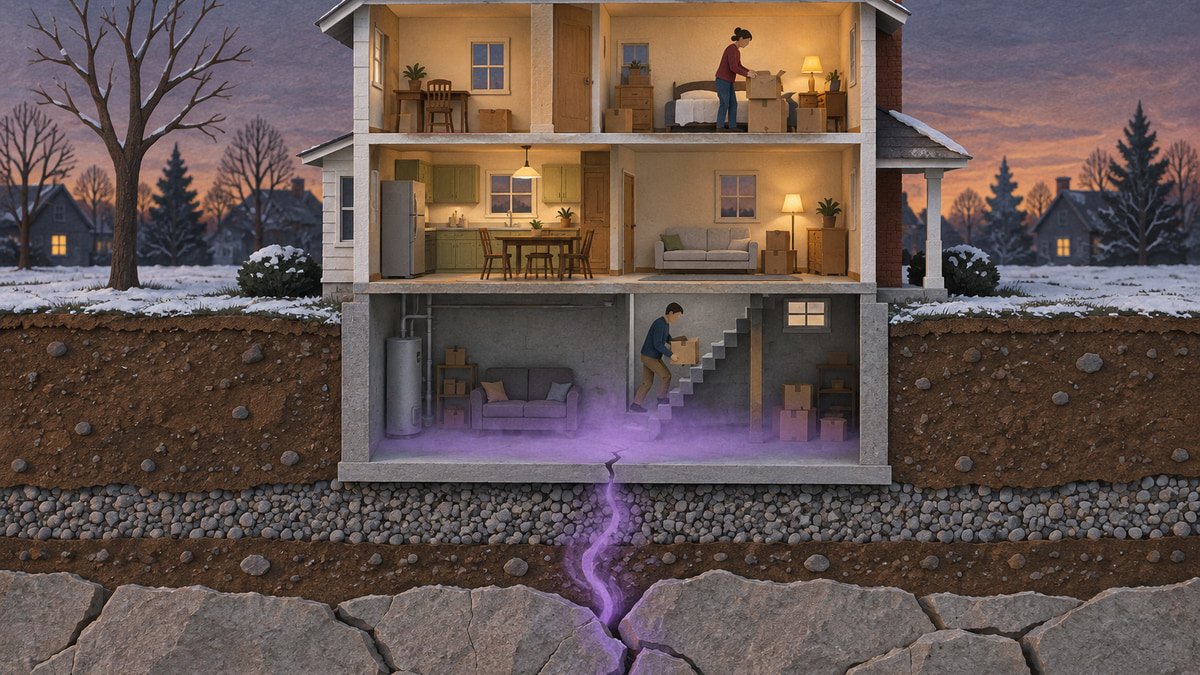
A radon result you can act on takes a long-term test of at least three months during the heating season. Most condition periods run days, not months, so a proper test almost never fits inside the deal.
That is why Health Canada suggests sellers test before they list and buyers test after they move in. If the number comes back above 200 Bq/m³, the usual fix is a mitigation system installed by a certified professional, and newer homes may be covered by Tarion.
Why the test doesn't fit inside the deal
Radon is a radioactive gas that comes out of the ground. You can't see it or smell it, and Health Canada is clear that testing is the only way to know what a particular house has.
The problem in a sale is timing. Health Canada's measurement guide calls for a test of at least 91 days, with at least 91 days of it in the heating season, when windows are closed and the house is drawing air from below. A typical inspection or financing condition gives you a week or two. Nobody is going to hold a deal open for a winter.
Short-term kits do exist and they can flag a very high reading, but Health Canada's guidance is that a short-term result isn't what you base a mitigation decision on. So a quick test during conditions tells you less than people expect, in either direction.
This is also why a general home inspection won't settle it. As I covered in my piece on what a home inspection covers and what it misses, inspectors don't test for radon, and nothing they can do in a two-hour visit replaces a three-month reading.
If you're selling: test before you list
If you are thinking about selling in the spring, the months ahead are exactly the right window for a long-term test. Place it on the lowest level of the house that people actually use, leave it through the winter, and send it to the lab before you list.
Most homes come back low, and a recent long-term result under the guideline is a clean, simple answer if a buyer asks. If it comes back high, you have time to have a system installed and retested before a buyer ever sees the house, instead of negotiating it under pressure.
If you already have a result that came back high and nothing was done about it, talk to me and your lawyer before you list about how that gets handled. It is much easier to deal with up front than halfway through a deal.
If you're buying: what you can actually do before firm
You usually can't get a proper result before your conditions come off, but you can still ask the right questions and plan for the answer.
- Ask whether the seller has ever done a long-term radon test, when, and on what level of the house. A copy of the lab result is worth more than a verbal answer.
- If there is a mitigation system already in place, ask who installed it, whether they were certified, and whether there are before and after readings.
- If the house has a finished basement you plan to use as living space, factor a possible mitigation system into your thinking the same way you would an older roof.
- If radon matters a lot to you, raise it early. The conditions in your offer are where you have leverage, and anything unusual needs to be drafted properly by your lawyer, not added at the last minute.
Health Canada notes that some transactions use a holdback, where part of the purchase price is held after closing until a long-term test is done. That is not common, both sides have to agree to it, and the terms belong with the lawyers. For most buyers, the practical plan is simpler: test after you move in and budget for the possibility of a fix.
| Test | When it happens | What it gives you |
|---|---|---|
| Seller, long-term test before listing | Through the heating season before the house goes on the market | A result you can act on, and time to fix it before a buyer is involved |
| Short-term test during conditions | A few days inside the condition period | A rough flag at best; not what Health Canada uses for mitigation decisions |
| Buyer, long-term test after possession | Your first heating season in the house | The real number for how you will live in the home, with up to a year to act if it is high |
If the number comes back high
Health Canada's guideline is 200 becquerels per cubic metre. Above that, it recommends reducing the level within a year, and sooner the higher the reading is.
The fix is usually not dramatic. Health Canada describes active soil depressurization as the most trusted and effective method: a pipe and fan that draw the gas from under the slab and vent it outside. It says a system can usually be installed in less than a day and typically cuts radon by more than 90 per cent. Use a mitigation professional certified through the Canadian National Radon Proficiency Program, known as C-NRPP.
After it is installed, the follow-up matters as much as the system: a short-term test right after, a long-term test through the first heating season, and a retest every five years. Health Canada also recommends retesting after renovations that change how the house is sealed or ventilated, which is worth remembering if you are finishing a basement.
Newer homes and Tarion
If the house is still within seven years of its original possession date, Tarion's new home warranty includes radon remediation coverage when a test shows more than 200 Bq/m³. Tarion's construction guidelines state that warranty coverage stays with the home if it is sold during that period, so a buyer of a newer resale may be inheriting it. My comparison of new construction and resale in Eastern Ontario covers the rest of that warranty picture.
Tarion says to go to the builder first, and to make sure the test, or the professional doing it, is C-NRPP certified so the result can be used to decide eligibility. If you are buying a newer home, ask the seller for the warranty start date so you know how much of that window is left.
Radon, step by step
- Sellers: place a long-term test on the lowest lived-in level this heating season, before you list.
- Buyers: ask for any existing long-term result, the level it was taken on, and the date.
- If a system is already installed: ask for the installer's name, certification and any before and after readings.
- Newer homes: get the warranty start date so you know whether Tarion coverage is still available.
- After closing day: put a long-term test down in your first heating season and follow the result.
Buying or selling somewhere between Ottawa and Brockville and wondering where radon fits into your timeline?
Send me the address and where you are in the process, and we can work out when a test makes sense for you. Get in touch. No pressure either way.
Sources: Health Canada, Radon in real estate; Health Canada, Guide for radon measurements in homes; Health Canada, Radon guideline; Health Canada, Reduce radon in your home; Tarion, 4 things every homeowner should know about radon; Tarion, Construction Performance Guidelines.
This is general information about how radon testing usually fits around an Ontario home sale, not legal, health or technical advice. Your signed agreement, your lawyer and a C-NRPP certified professional are what govern your situation.