
Blog > Buying Waterfront Near Brockville: Who Has to Approve the Dock or Boathouse
Buying Waterfront Near Brockville: Who Has to Approve the Dock or Boathouse
by
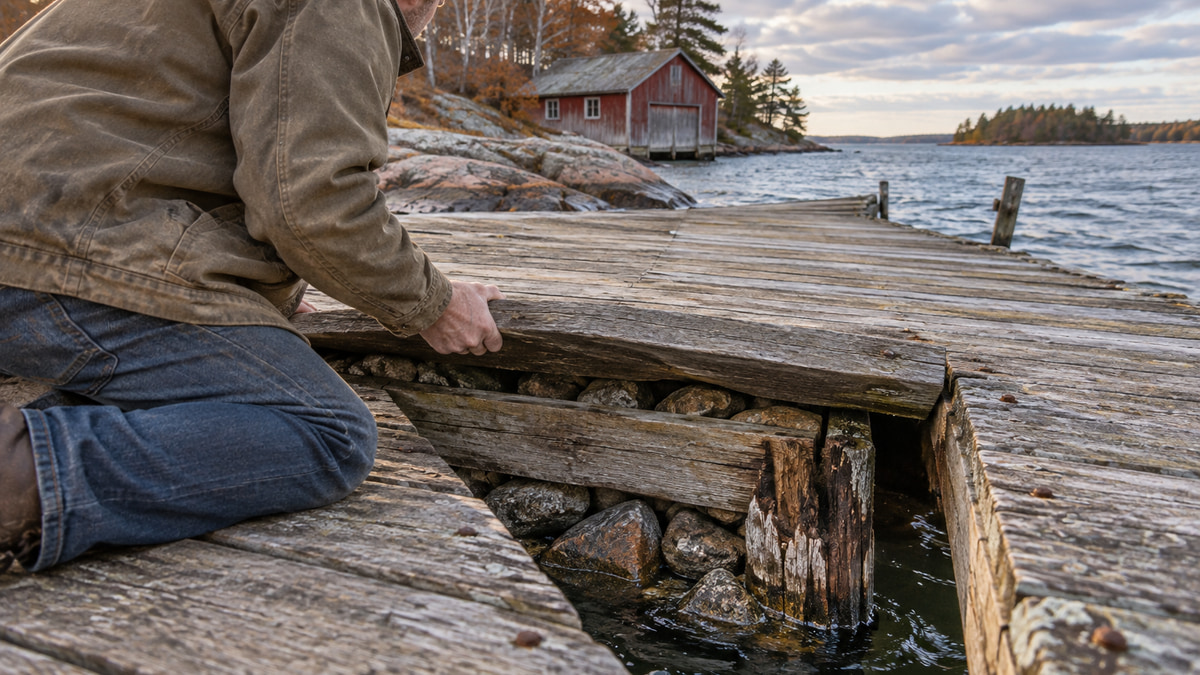
Usually more than one. On the St. Lawrence near Brockville, a permanent dock or a boathouse can involve Cataraqui Conservation, the Ontario Ministry of Natural Resources, two federal departments and the township. A simple removable dock usually involves far less.
When you are buying, the useful questions are whether the dock or boathouse that comes with the house was permitted, and what it would take to repair or replace it. Ask for the permits before you firm up, because a tired crib dock is a much bigger job than it looks from the deck.
Why the dock deserves its own question
Most buyers look at a waterfront dock as part of the property. In practice it sits where several sets of rules overlap. Ontario says the Crown land it manages includes the beds of most lakes and rivers, so the cribs or posts holding a dock up are often resting on land the owner of the house does not own.
That is a different question from where the lot line is. Whether the property actually runs to the water, or stops at a shore road allowance, is a title question we covered in buying waterfront when your lot stops short of the water. This article is about the structures themselves: who has to approve them, and what that means for the one you are buying.
Who can have a say in a dock or boathouse
Cataraqui Conservation's area runs from Greater Napanee in the west to Brockville in the east, so for most St. Lawrence waterfront from Brockville through the Thousand Islands it is the conservation authority. East of Brockville, check which authority covers the lot. Our floodplain article goes into how conservation authority regulation works more generally.
| Who | What they look at | When it usually comes up |
|---|---|---|
| Cataraqui Conservation | Permanent docks, boathouses and other shoreline work, for flooding, erosion and wetland impacts | From Brockville west through the Thousand Islands, any permanent dock, a boathouse, or replacing or rebuilding an existing permanent dock |
| Ontario Ministry of Natural Resources | Structures on Crown land and shore lands, which include the beds of most lakes and rivers | A structure in physical contact with more than 15 square metres of shore lands, or dredging and filling |
| Fisheries and Oceans Canada | Fish and fish habitat under the Fisheries Act | Any in-water work. Its code of practice covers many residential docks and boathouses, but not new crib docks or fill |
| Transport Canada | Navigation, under the Canadian Navigable Waters Act | Docks and boathouses that fall outside the Minor Works Order criteria, such as ones too long or too close to a channel or a neighbour |
| The township | Zoning and building permits | A boathouse or other building on the shore, and how close structures can sit to the water and lot lines |
Not every one of these applies to every dock. A floating dock held by an anchor is a very different file from a crib dock with a boathouse on top. What matters is knowing which of them could apply to the specific structure you are buying.
Removable or permanent: why the type of dock matters
Cataraqui Conservation draws a clear line here. It says no permit is needed for removable docks, including floating docks held by an anchor, cantilevered docks, and aluminum-framed docks whose posts rest on the bottom. A permit can still be needed if a removable dock is fixed to a new support like a concrete pad, or if fill is placed or removed.
A permit is required for new permanent docks, such as post-pile or crib docks, and for replacing or significantly repairing an existing permanent dock, including replacing its framing or foundation. Removing crib material when a crib dock is taken out also needs one.
This is where buyers get surprised. A crib dock is a timber box filled with stone. Cataraqui Conservation describes cribs as becoming less common, which usually means the ones you see on older waterfront have been there a while. If the cribs are failing, the fix is a rebuild, not a few new boards, and a rebuild brings in the permit questions above. Fisheries and Oceans Canada's code of practice for residential docks also excludes new crib docks, so a like-for-like crib replacement would fall outside that standard route.
How to check the dock you are buying
None of this shows on a listing sheet. You find it by asking early, while you still have conditions:
Questions to ask before you firm up on a waterfront home
- Is the dock removable (floating, aluminum frame, cantilevered) or permanent (crib or post-pile)?
- Was a Cataraqui Conservation permit issued for the dock, the boathouse or any shoreline work, and can the seller provide it?
- Was a building permit issued by the township for the boathouse, and does it meet the zoning?
- Did any structure need a provincial work permit because it touches more than 15 square metres of shore lands?
- Has anything been rebuilt, extended or filled in, and when?
- Does the survey show the lot running to the water, or is there a shore road allowance in front?
- Can you get clear photos of the cribs or posts under the dock, not just the deck?
If the seller has no paperwork, that is not automatically a problem. Many structures predate current rules, and a removable dock may never have needed a permit. But it is worth a call to Cataraqui Conservation and the township with the address before you waive, so you know whether anything on the shore is likely to raise questions when it needs work.
Boathouses are buildings on the water
A boathouse brings in the township as well as the shoreline agencies. Leeds and the Thousand Islands, for example, lists accessory buildings among the residential work that needs a building permit, with an exemption for detached structures under 10 square metres that still have to meet zoning. Cataraqui Conservation lists boathouses among the shoreline work that likely needs its permit too.
On the provincial side, Ontario requires a work permit for a structure in physical contact with more than 15 square metres of shore lands. Anything floating above the shore lands is not considered to be in contact with them. A boathouse on cribs or a large permanent dock can cross that line where a modest floating dock would not.
If the boathouse has a second storey, living space or plumbing, ask the township directly what it allows. Those are zoning questions, and the answer can change what you are really buying.
The federal side, briefly
Transport Canada's Minor Works Order lets a dock or boathouse go ahead without applying for approval if it meets a set of criteria. Among them: at least 5 metres from the property boundaries, more than 10 metres from anyone else's work in the water, at least 30 metres from a navigation channel, no more than a third of the width of the waterway, and no longer than similar docks within 100 metres on the same bank, to a maximum of 50 metres, or 30 metres if there are none. Lengths are measured from the ordinary high water mark. In charted waters, the owner also has to notify the Canadian Coast Guard in writing at least 48 hours before starting and again when the work is done.
Fisheries and Oceans Canada's code of practice for residential boathouses, docks and moorings covers floating structures and ones supported by pipes, piles, poles, anchors, concrete blocks or cantilevers. To use it you notify the department at least 10 working days before you start and meet its conditions, which include no fill or dredging and, for repairs, no permanent increase in the original footprint below the ordinary high water mark.
For a buyer, the point is not to memorize these rules. It is to know that a longer dock, a bigger boathouse or a crib rebuild is not a simple weekend project, and to factor that in before you settle on price.
Common follow-up questions
Do I need a permit to put in a floating dock?
Usually not from Cataraqui Conservation, which says removable docks, including floating docks held by an anchor, do not need its permit. If there is a wetland nearby, or you plan a concrete pad or fill on shore, ask first. The federal criteria about distance from property lines and channels still apply to where it goes.
The seller says the dock has been there for decades. Is that enough?
It tells you the dock is old, not that it was approved, and it does not change what is needed the next time it is rebuilt. Treat it as a reason to look closely at the condition, not as a substitute for the paperwork.
Can I add a bigger dock or a boathouse after I buy?
Possibly, but that is a permitting project, not a given. If a new dock or boathouse is part of why you want the property, call the conservation authority and the township before you firm up. Our Brockville waterfront living guide covers the wider picture of buying along this stretch of the river.
Looking at a waterfront home near Brockville or in the Thousand Islands?
Send me the address and I will tell you what I would want to know about the dock, the boathouse and the shoreline before you firm up. Get in touch. No pressure either way.
Sources: Ontario, Crown land and shore land work permits (updated September 25, 2026); Cataraqui Conservation, Docks and shoreline; Fisheries and Oceans Canada, Boathouses, docks and moorings code of practice (modified August 17, 2026); Minor Works Order, SOR/2021-170 (current to October 19, 2026); Township of Leeds and the Thousand Islands, Building permits. All read November 5, 2026.
This is general information about the approvals that can apply to docks and boathouses, not legal or permitting advice. The conservation authority, the township and the federal and provincial agencies are the ones who can confirm what applies to a specific property.