
Blog > Backwater Valves in Older Ottawa Homes: What Buyers Should Check Before They Buy
Backwater Valves in Older Ottawa Homes: What Buyers Should Check Before They Buy
by
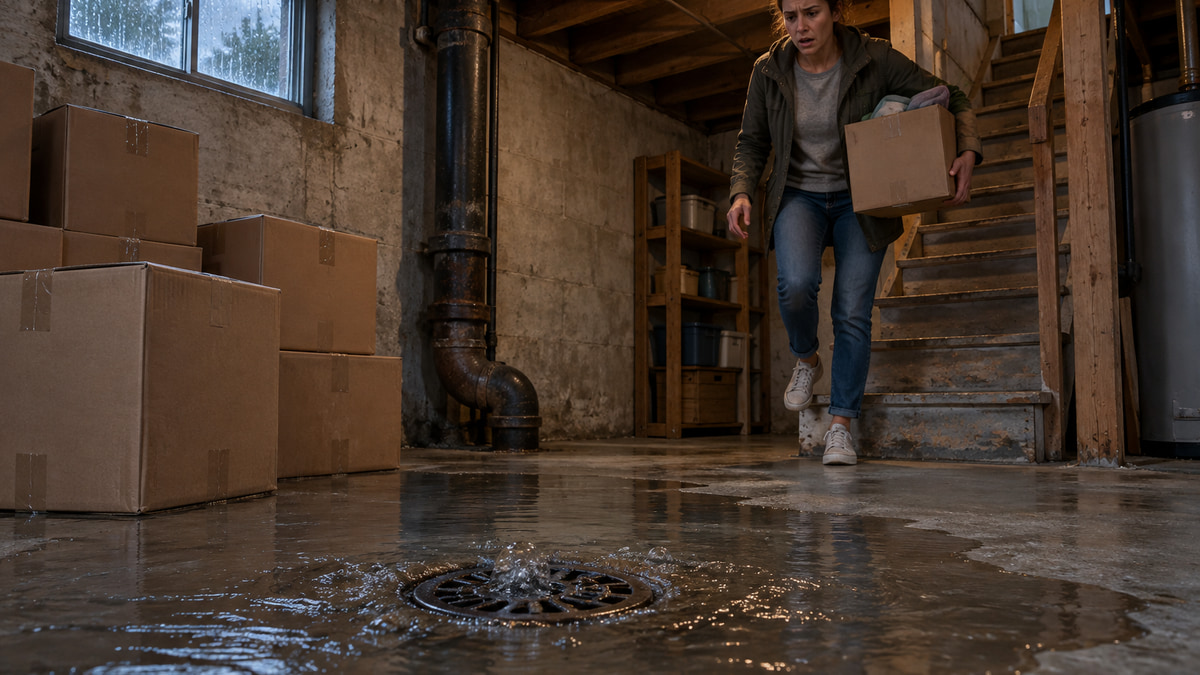
A backwater valve stops sewage from the City sewer from flowing back up into your basement when the sewer is overloaded in a heavy storm. An older Ottawa home may not have one, and you usually cannot tell from the listing whether a house has one.
Before you firm up on an older Ottawa house, find out whether there is a backwater valve, whether it was installed with a permit, and whether your insurance will include sewer backup coverage. The City's rebate can help you add one after you move in, but it does not pay to fix or replace one that is already there.
What a backwater valve actually does
Your house drains into a pipe called the sewer lateral, which runs under your lawn to the City sewer main under the street. In a big storm, the City says the sewer can surcharge, meaning it fills past capacity. When that happens, water and sewage can push back up the lateral and come out of the lowest openings in the house, usually the basement floor drain.
A backwater valve sits on that pipe and has a flap that closes when water tries to flow the wrong way. The City says that without a valve, or with one that has not been maintained, sewage can back up into the home during a surcharge.
This is a different problem from river flooding or water seeping through foundation cracks. If the house is near a river, the floodplain question is its own check, which I cover in what a floodplain designation actually changes.
Does the house you are looking at have one?
You can usually answer this before you make an offer, or as part of your inspection. Here is where I would look:
- The basement floor. An indoor valve is usually under a removable access cover in the floor, near where the main drain pipe leaves the house. If the basement is finished, the cover may be inside a closet or under a hatch.
- The paperwork. Ask the seller whether a valve was installed, when, and whether there is a building permit and a City inspection. If they used the City rebate, they would have needed the permit, the inspection report and a paid invoice, so those documents should exist.
- Which side it protects. A sanitary valve protects against sewage. A storm valve protects against backflow from the storm sewer. Ask which one the house has, or whether it has both.
- The sump pump. If there is a sump pit, check whether the pump has a battery backup.
- Past water. Ask directly whether the basement has ever had water come up through the floor drain, and look for staining around it.
Then have your home inspector look at it. A valve that exists but has not been cleaned can fail when you need it. My guide to what a home inspection covers and misses is worth reading before you book one.
What the City's rebate program pays for
The City of Ottawa's Residential Protective Plumbing Program was upgraded in April 2025 with larger rebates and a simpler application. The City pays the lesser of the maximum below or the actual cost of the work.
| Item | City of Ottawa rebate | What it is for |
|---|---|---|
| Building permit fee | 100% of the current fee | You need the permit before the work starts in any case. |
| Indoor sanitary backwater valve | Up to $1,000 | Stops sewage from the City sewer coming back up through basement drains. |
| Storm backwater valve | Up to $1,000 | Protects against water coming back from the storm sewer. |
| Outdoor storm backwater valve | Up to $2,500 | Installed outside the house on the storm side. |
| Sump pump with battery backup, existing pit | Up to $1,500 (primary or secondary) | Battery backup keeps the pump running if the power goes out. |
| Sump pump with battery backup, new pit | Up to $3,000 (primary or secondary) | Covers building a new sump pit as well as the pump. |
Which homes qualify
The City's current program page says the home must be a residential property in Ottawa built before January 1, 2004 for storm sewer work, or before January 1, 2012 for sanitary sewer work. You need a building permit before installation, the work has to meet City by-laws and standards, and you need a completed Building Code Services inspection report.
You apply within one year of the date the building permit was issued, with proof that you own the property, a paid itemized invoice, a copy of the permit and the inspection report.
The rebate is for new devices, not for fixing the old one.
The City says rebates are not available for the maintenance, repair or replacement of existing protective plumbing devices. If the house already has a valve and it is in poor shape, plan for that cost yourself. And because a permit is required before installation, do not book the work and look into the rebate afterwards.
Who is responsible for the pipe under the lawn?
This surprises a lot of buyers. The City says it is responsible for the sewer lateral from the property line to the street, and the homeowner is responsible for the part from the property line to the house. Blockages in the lateral are the homeowner's responsibility unless they are caused by City-owned tree roots or are on City property.
In an older house with mature trees, it can be worth asking a plumber to run a camera through the lateral before you firm up, so you know what you are taking on. If you are already checking the water service on an older Ottawa house, my piece on lead water pipes in older Ottawa homes covers the other pipe that runs under the same lawn.
The insurance question to ask before you firm up
In an April 2026 release, the Insurance Bureau of Canada said basement water damage from a sewer backup is only covered if you have bought specific, optional sewer backup coverage. Overland flood coverage is also optional and separate.
So when you get insurance quotes on an older Ottawa house, ask specifically whether sewer backup coverage is included, what it costs and what the limit is, and whether a backwater valve changes the answer. Do it during your conditional period, not the week before closing. My guide to insuring an older or rural home goes through the other questions insurers ask.
If you are selling an older Ottawa home
If you have already installed a backwater valve or a sump pump with battery backup, find the building permit, the inspection report and the invoice before you list. Buyers and their inspectors will ask, and documents answer the question faster than a description does.
Questions Ottawa buyers ask about backwater valves
Can I claim the rebate on a valve the seller already installed?
The program pays the owner who applies with their own paid invoice, permit and inspection report, within a year of the permit. It does not cover repair or replacement of an existing device. In practice, the rebate is for work you arrange after you own the house.
What if the basement has flooded from a sewer backup before?
Ask the seller what happened and what was done about it. The City also runs a separate Compassionate Grant for homeowners and tenants affected by basement flooding caused by sewer surcharging. You can reach the City through 3-1-1 about it.
How do I keep a valve working once I own the house?
The City recommends maintaining it according to the manufacturer's instructions, periodically and before forecast heavy rain, and checking that it is free of debris and that the access cover is secure. In older homes with cast iron pipes, it notes that rust at the hinge can stop the flap from closing.
What I would do before buying an older Ottawa home
- Ask the seller whether there is a backwater valve and a sump pump, and ask for the permit and inspection paperwork.
- Find the valve access cover in the basement floor, and ask your inspector to look at it.
- Ask whether the basement has ever had water come up through the floor drain.
- Get an insurance quote that names sewer backup coverage before your conditions come off.
- If there is no valve, check the City rebate rules and plan to get the permit before any work starts.
None of this is a reason to avoid older Ottawa houses. It is a ten-minute conversation that can save you a very bad first spring.
Looking at an older house in Ottawa?
Send me the listing and I will tell you what I would ask the seller about the basement before you write an offer. Get in touch. No pressure either way.
Sources: City of Ottawa, Residential Protective Plumbing Program; City of Ottawa, Basement flooding; City of Ottawa, It is now even easier to help protect your home from basement flooding (April 2, 2025); Insurance Bureau of Canada, flood season advice for Ontario (April 16, 2026). Checked October 10, 2026.
This is general information, not legal, insurance or plumbing advice. Rebate amounts and eligibility are set by the City and can change. Confirm current rules with the City, your insurer and a licensed plumber before relying on them.