
Blog > Lead Water Pipes in Older Ottawa Homes: How to Check Before You Buy, and What Replacing One Involves
Lead Water Pipes in Older Ottawa Homes: How to Check Before You Buy, and What Replacing One Involves
by
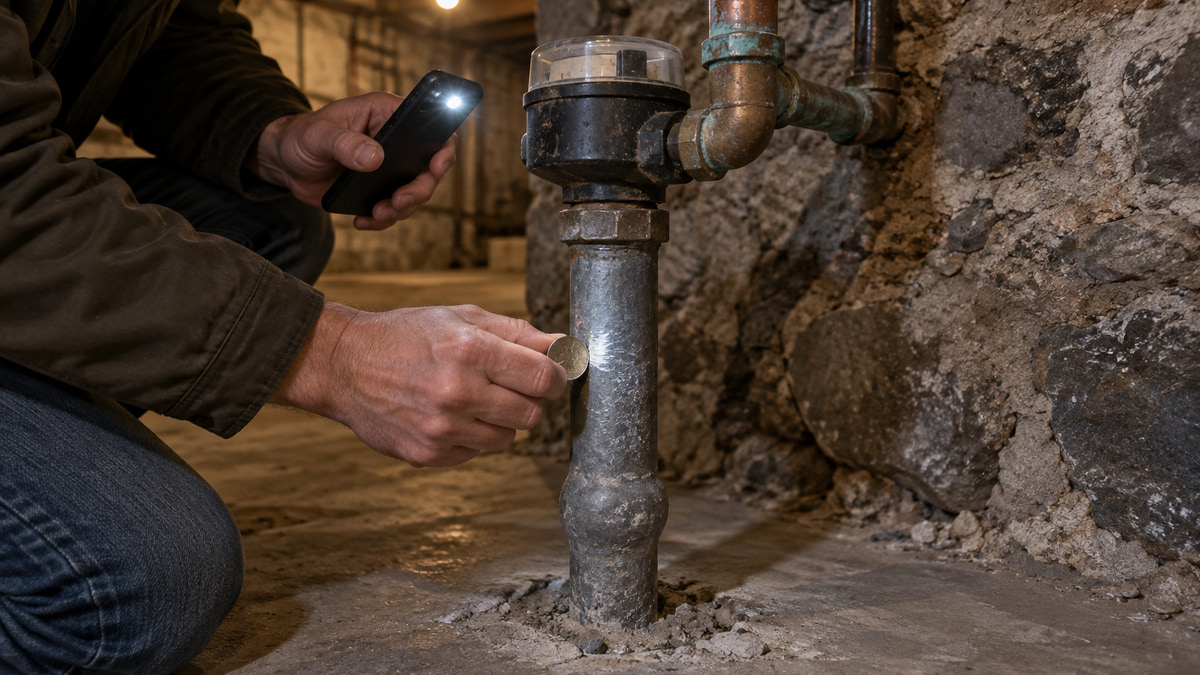
If the Ottawa house you are looking at was built before 1958, the water pipe coming up through the basement floor could be lead. The City says about 15% of Ottawa homes were originally built with lead water service pipes. You can usually get a good idea in a minute at the water meter: lead is dull grey and soft, copper is red-brown.
If it is lead, the owner is responsible for the pipe from the house to the City's shut-off valve. The City runs a program that can replace its own section at the same time, pays a small rebate in some cases, and lets owners spread their share over the property tax bill. That makes it a cost and timing question you can plan for, not a reason to panic.
Why lead pipes are an older-house question in Ottawa
The City says the water leaving its treatment plants contains no lead. Lead gets into tap water on the way in, from a lead service pipe, older brass fixtures or lead solder inside the house.
According to the City's Lead Pipe Replacement Program page:
- Who is likely affected. Lead service pipes were used until the 1950s. Homes built after 1958 are at little or no risk, unless the house connects to an older watermain, in which case the City's portion of the pipe can still be lead.
- Who usually is not. Commercial, industrial, institutional and multi-residential buildings are unlikely to have lead service pipes, so this is mostly a question for older houses.
- What the numbers look like. The City reports lead below 1 part per billion in 85% of homes, and typically 1 to 5 ppb in older homes with a lead service pipe.
- The benchmark. Health Canada's maximum is 5 ppb. Ontario's standard is 10 ppb, and the City notes the province is reviewing it.
If you are not sure whether a newer house sits on an older watermain, the City says to ask through 3-1-1 or info-water@ottawa.ca.
How do you check for a lead pipe during a showing?
Go to the basement and find where the water line comes up through the concrete floor to the water meter. That short stretch below the meter is the service pipe.
- Lead: dull grey, and soft enough that a hard object scratches it easily to bare metal.
- Copper: red-brown, sometimes with green deposits where it has corroded.
- Above the meter: the pipes inside the house may be copper even when the line below the meter is lead, so look at the right section.
The City's own test is to scratch the pipe with sandpaper. On a house you do not own yet, ask before you scratch anything. Often a look, a photo and a question to the seller are enough to know what you are dealing with, and you can ask your home inspector to look at it too. What a home inspection covers and misses is worth reading before you book one.
What does replacing a lead pipe involve in Ottawa?
The pipe is split in two. The owner is responsible for the private part, from the house to the shut-off valve. The City owns the public part, from the shut-off valve to the watermain. What happens next depends on which parts are lead.
| What you find | Which City route applies | What to know |
|---|---|---|
| Private part is lead, City part is not | Partial rebate | Up to $1,000, about 20% of the cost, for private replacements done on or after September 25, 2019. Since July 1, 2023, proof that the new pipe was connected at the City's service post is required. |
| Both parts are lead | Full replacement program | The City replaces its part while the owner replaces theirs at the same time, under a Construction Agreement. Families with children under six, or expecting, get priority. |
| City part is scheduled for replacement within two years | Partial rebate instead | The private replacement is handled under the rebate rather than the full program. |
| House built after 1958 | Usually nothing | Little or no risk, unless the house is on an older watermain. Ask the City to confirm the watermain age. |
What the owner pays
The City does not publish a set price. It says the cost depends on how long and how deep the lead pipe is. In the full program, the owner's share covers digging up and replacing the private pipe. Preparation work and putting things back afterward are billed separately and cannot go into the loan. On City property, the City restores with topsoil, sod, gravel and asphalt only, so special finishes may not be included. The rebate does not cover gardens, landscaping, decks, porches or interior finishes.
The owner can pay the contractor directly, pay the City within 30 days of the invoice, or borrow. A loan of $5,000 or less is repaid over 5 years on the property tax bill. A larger loan can be repaid over 5 or 10 years. Interest is set at the City's debenture rate when the loan is issued, and the City says that is usually a little higher than typical personal loan rates.
A private replacement also needs a building permit and utility locates through Ontario One Call. The owner has to be the one who applies to the program.
A water test will not usually fit inside your conditions.
The City offers a free lead test for tap water, and it recommends sampling in the warmer months, May to September. That is a homeowner request, on the City's timing. In a normal offer you will not own the house yet and your conditions may only run a few days. Plan around what you can see and confirm, and treat the test as something you do after you move in.
Raising it before you firm up
If the pipe below the meter looks like lead, a few questions go a long way:
- Has the service pipe been replaced, and is there a building permit or rebate approval to show for it?
- Was only the private part done, or the City part as well?
- Did the seller use the City's loan? It is repaid on the property tax bill, so ask your lawyer how any balance is dealt with on closing.
- If nothing has been done, do you want to factor replacement into your price, or ask for something in the agreement? Your lawyer handles the wording.
This is the same problem as radon testing in a home purchase: the proper test takes longer than the deal does, so the useful work happens before you waive conditions, and the test comes after.
Selling an older Ottawa home with a replaced lead pipe
If you already replaced it, gather the paperwork before you list: the building permit, any rebate approval, and anything from the City confirming the connection. If you are carrying a replacement loan on your tax bill, tell your lawyer early. A buyer who asks about the pipe and gets a clear answer with documents is a much easier conversation than one who finds a grey pipe on their own.
Questions people ask about lead pipes in Ottawa
Is Ottawa's tap water itself lead-free?
The City says the water it supplies is lead-free. Lead comes from pipes and fixtures between the street and your tap, which is why older houses are the concern.
What can I do in the meantime if a house I buy has a lead pipe?
The City suggests running the tap for about two minutes to flush water that has been sitting in the service pipe before cooking or drinking. It estimates that costs about 2 cents. If a City test shows 5 ppb or more, or you take part in the full replacement program, the City offers a reusable pitcher and about a year of NSF-53 filters.
How do I get the water tested once I own the house?
Request a test through the City's 3-1-1 lead testing request. The City says testing between May and September gives the most accurate results.
What I would do, buying an older Ottawa house
- Check the year it was built. Before 1958, look at the pipe below the meter on the first visit.
- If it looks grey, ask the seller what has been replaced and ask for the paperwork.
- Get your home inspector's view on it, and talk to your lawyer about the agreement if nothing has been done.
- If you buy it, request the City's water test in the warmer months and apply to the program if the pipe is lead.
Lots of good Ottawa houses were built with lead service pipes. It is a known problem with a known fix. You just want to know about it before you firm up, not after.
Looking at an older house in Ottawa and not sure what to check in the basement?
Send me the address and I will tell you what I would look at and what to ask the seller before you write an offer. Get in touch. No pressure either way.
Sources: City of Ottawa, About the Lead Pipe Replacement program; City of Ottawa, Request to have your home's drinking water tested for lead. City pages checked October 7, 2026. Health Canada and Ontario limits as stated by the City.
This is general information, not legal, plumbing or health advice. Program rules, rebates and loan terms are set by the City and can change. The City, a licensed plumber and your lawyer can confirm what applies to a specific property.