
Blog > Do You Need a Survey When You Buy a Home in Ontario? What an Old Plan Can and Can't Tell You
Do You Need a Survey When You Buy a Home in Ontario? What an Old Plan Can and Can't Tell You
by
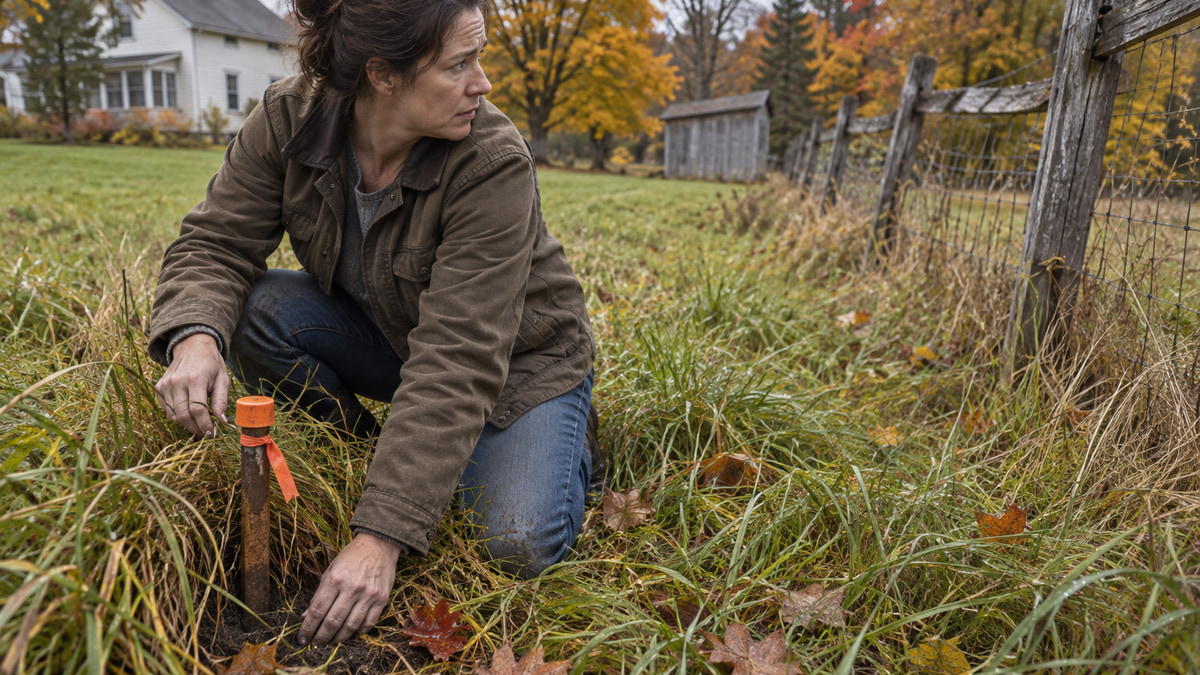
Not always, but you should always ask. Ontario does not force every resale buyer to order a new survey. What a survey gives you is an Ontario Land Surveyor's opinion of where the boundaries are and whether the house, garage, fence, driveway and anything else on the lot actually sit where they should.
An existing survey can be enough when nothing has changed since it was done. If there have been additions, new fences, sheds, a pool or a lot that has never been clearly marked, an up-to-date Surveyor's Real Property Report is the only document that answers the question. Title insurance does not replace it.
What a survey actually tells you
When you buy a house, the agreement describes the land, and the land registry describes the land. Neither one shows you where the garage sits relative to the property line, or whether the neighbour's fence is eating two feet of your backyard. That is the job of a survey.
In Ontario, only a licensed Ontario Land Surveyor can give you that boundary information. The document most buyers and lenders care about is the Surveyor's Real Property Report, usually shortened to SRPR. According to the Association of Ontario Land Surveyors, it has two pieces:
- A plan showing the boundaries, the dimensions, and the location of the visible buildings and other improvements relative to those boundaries, along with easements and utility rights-of-way.
- A written report with the surveyor's opinion of any concerns found during the research and field work, such as something sitting over a line.
That second part is what makes a current SRPR so useful. It does not just draw the lot. It tells you what the surveyor thinks is wrong with it, if anything.
Old survey, new survey or title insurance: what each one covers
These three get mixed up all the time, partly because a seller's old survey, a new survey and a title insurance policy can all show up in the same conversation with your lawyer.
| Option | What it can tell you | Where it falls short |
|---|---|---|
| Existing survey from the seller or an older plan | The boundaries and the improvements as they were on the day it was done. Often a good starting point. | Anything built, moved or added since. A plan done for construction may not show later overhangs, fences, driveways or overhead lines. |
| New Surveyor's Real Property Report | Current boundaries, current improvements, easements, and the surveyor's written opinion of any concerns. | Takes time to book and complete, and the cost depends on the property. It needs to be planned for before you are up against a deadline. |
| Title insurance policy | Financial protection against certain covered title problems, which can include some survey-type issues depending on the policy wording. | It does not tell you where your boundaries are. The surveyors' association is clear that title insurance is not a replacement for a surveyor's opinion. |
If you want the details on what a policy does and does not pay for, I went through that in title insurance in Ontario. The short version for this article: insurance can help after a problem shows up. A survey is how you find the problem before you own it.
When an existing survey is probably fine, and when it isn't
There is no single rule here, so this is the way I would think it through with a buyer. Pull out the existing plan and walk the property with it. Then ask whether the plan still matches what you see.
An existing survey is more likely to be enough when:
- it shows the house as it stands today, with no additions, decks, garages or pools built since
- the fences and driveway line up with what the plan shows
- nothing sits close to a line, so a small error would not matter much
- your lender and your lawyer are comfortable with it
A new SRPR is worth pushing for when:
- there is no survey at all, or the only plan predates major work on the property
- a fence, shed, driveway or addition looks tight to the line, or the neighbour's does
- you plan to build something yourself soon, like a fence, garage or addition, and need to know exactly where you can put it
- the lot has an easement or a shared driveway and you need to see where it actually runs on the ground (more on that in easements and rights-of-way in Ontario)
- your lender asks for one, which the surveyors' association notes some lenders do
A fence is not a boundary. It is just where someone decided to put a fence, sometimes decades ago. The surveyors' association warns that a mislocated fence, driveway or carport can lead to legal problems, extra construction costs and expensive disputes between neighbours.
If you are relying on the fence to tell you what you are buying, you are relying on a guess. A boundary question is a question for a surveyor, and what it means legally is a question for your real estate lawyer.
Why this matters more on rural and older Eastern Ontario properties
In a newer subdivision in Barrhaven or Orleans, lots are uniform and the original plans are usually easy to find. The questions tend to be about a deck or a fence added later.
Outside the city it can be a different picture. A rural lot near Brockville or in a township like Elizabethtown-Kitley can have farm fence lines that are older than any survey on file, outbuildings that were added over the years, and a driveway or lane that has simply always been used. An older house in town can have a garage or addition that went up long after the last plan was drawn. On those properties, an old plan can describe a lot that no longer matches what is on the ground.
If the property also has a well or septic system, the location of those relative to the lines matters too. I covered the inspection side of that in wells and septic systems in Eastern Ontario.
How to find out what survey exists
Start early, ideally before you write an offer, so you know what you are working with. There are three places to look.
- The seller. Ask through the listing agent whether there is a survey and how old it is. In the standard OREA Agreement of Purchase and Sale, the seller agrees to deliver any sketch or survey within the seller's control if the buyer asks, before the requisition date. Your lawyer will know how that works in your agreement.
- Existing survey records. Ontario Land Surveyors keep records of past surveys, and services such as Protect Your Boundaries, a licensed member of the Association of Ontario Land Surveyors, hold large collections of existing plans. An existing plan can sometimes do the job for a fraction of the cost of a new survey.
- The land registry. Registered plans and documents can be searched through Ontario's land registry, including online through OnLand for a fee. Your lawyer will typically do this as part of the title search.
If none of those turns up anything current, you are deciding whether to order a new SRPR. The cost varies with the type of survey, the size and complexity of the lot, the location and the terrain, so get a quote from a licensed Ontario Land Surveyor for the specific property rather than relying on a ballpark.
What to do with this before you make an offer
The practical problem with surveys is timing. A new survey is not something you can always get in a few days, and resale deals in Ontario can move fast. So the time to raise it is before you are committed, not the week before closing.
- Ask whether a survey exists, how old it is, and whether you can see it.
- Walk the lot with the plan and note anything that does not match.
- Ask your lawyer whether the existing plan is enough, and whether the offer should give you time to get a new one.
- Check what your lender needs before you assume an old plan will be accepted.
None of this needs to slow a good deal down. It just means you know where the lines are before you sign for the land inside them.
Looking at a house or a rural property in Ottawa, Brockville or somewhere in between, and not sure whether the survey you have been handed is good enough?
Send me the listing and what you know about the lot, and I will help you sort out what to ask before you make an offer. Get in touch. No pressure either way.
Sources: Association of Ontario Land Surveyors, The Surveyor's Real Property Report and Boundaries and Your Land, both read in October 2026.
This is general information about buying property in Ontario as of October 2026, not legal or surveying advice. A licensed Ontario Land Surveyor and your real estate lawyer are the right people to confirm what a specific property needs.