
Blog > Selling a Home in Ontario When Only One Spouse Is on Title: Why Both Still Have to Agree
Selling a Home in Ontario When Only One Spouse Is on Title: Why Both Still Have to Agree
by
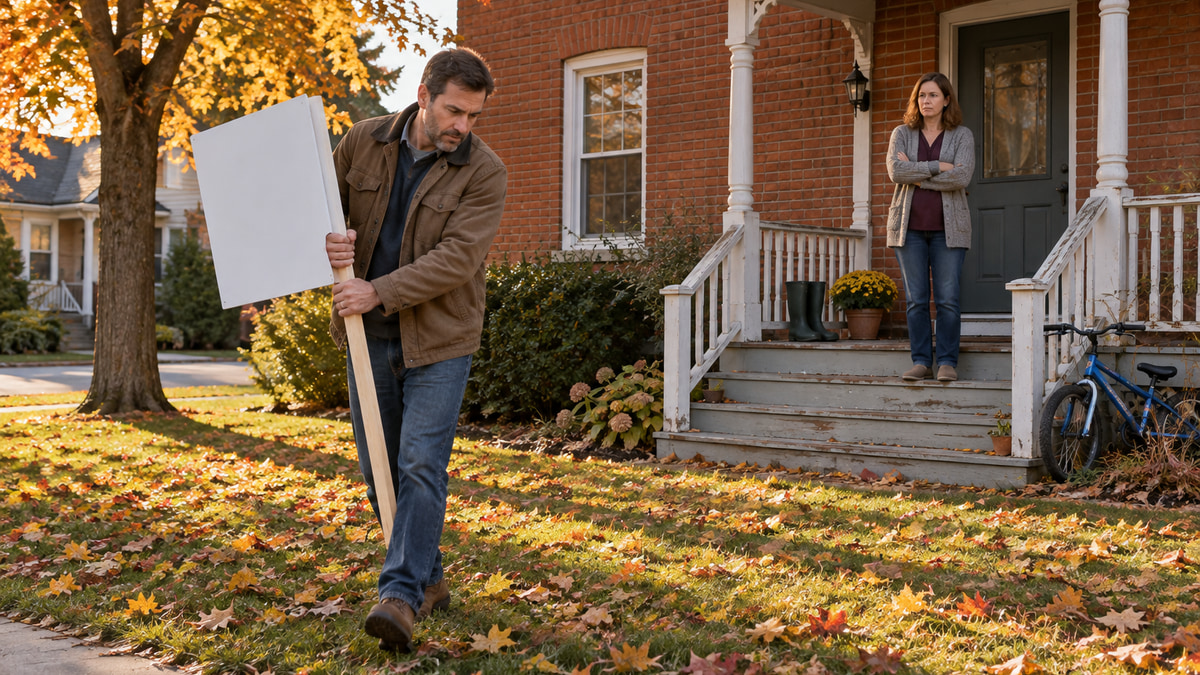
Usually, yes. In Ontario, if you are married and the house is your family home, your spouse generally has to agree to the sale even if only your name is on title. The same goes for putting a new mortgage or line of credit on it.
This comes from Part II of the Family Law Act. It treats the family residence as a "matrimonial home" and says neither spouse can sell or mortgage it alone, unless the other spouse consents, has released those rights in a separation agreement, or a court has authorized it.
Two details catch people out. The rule follows the marriage, not the title, so it can apply to a cottage as well as the house in town. And it does not apply to common-law couples in the same way, because this part of the Act only covers married spouses.
What counts as a matrimonial home
Under section 18 of the Family Law Act, every property that a spouse has an interest in, and that the spouses ordinarily occupy as their family residence, is their matrimonial home. If they have separated, it is the property they were ordinarily living in as their family residence at the time of separation.
A few things follow from that wording:
- Ownership by one spouse is enough. It does not matter whose name is on the deed. What matters is that one of you has an interest in it and you both live there as your family home.
- There can be more than one. The Act says "every property," so a cottage the family ordinarily uses can be a matrimonial home alongside the house you live in during the week.
- On a farm or other working property, it is only the residential part. If the land is normally used for something other than living on it, the matrimonial home is just the part reasonably needed for the use and enjoyment of the residence.
- Separation alone does not end it. A home you were living in as a family when you separated is still a matrimonial home for these purposes.
What the consent rule actually says
Section 19 gives both spouses an equal right to possession of a matrimonial home, whoever owns it. Section 21 then protects that right. No spouse can dispose of or encumber an interest in a matrimonial home unless one of four things is true:
- the other spouse joins in the document or consents to the transaction;
- the other spouse has released all their rights under this part of the Act in a separation agreement;
- a court order has authorized the transaction or released the property from these rules; or
- the spouses have together designated a different property as their matrimonial home, that designation is registered and not cancelled, and this property is not one they designated.
"Dispose of" covers selling. "Encumber" covers mortgaging. So the rule matters just as much when you refinance or add a home equity line of credit as it does when you list.
How it plays out in common situations
| Situation | Does the Family Law Act consent rule apply? | What to sort out first |
|---|---|---|
| Married, both on title | Both of you sign the sale anyway as owners | Nothing extra beyond the usual owner signatures |
| Married, only one on title, it is your family home | Yes. The spouse not on title needs to consent | Talk early. Make sure your spouse is on board before the listing goes live |
| Married, separated, still a matrimonial home | Yes, unless rights were released in a separation agreement or a court has dealt with it | Have your family lawyer confirm what your agreement or order allows |
| Married, selling a cottage the family uses | Possibly, if it is ordinarily occupied as a family residence | Do not assume a second property is outside the rule |
| Common-law, not married | Not under this part of the Act | Get legal advice anyway. Other claims can still exist |
Why buyers and their lawyers care
This is not just a technicality between the two spouses. Under section 21(2), a sale or mortgage made without the required consent can be set aside by a court. The exception is a buyer or lender who acquired their interest for value, in good faith and without notice that the property was a matrimonial home.
That is why the seller's spousal status is part of the closing paperwork. Section 21(3) says a statement by the person selling, for example that they are not a spouse, or that the property is not their family residence, is treated as sufficient proof that it is not a matrimonial home, unless the buyer had notice to the contrary. Your lawyer handles that statement on the closing, but the facts behind it have to be true.
It is also why the standard Ontario agreement of purchase and sale has a spousal consent section. If the seller is married and the home is a matrimonial home, the spouse who is not on title can sign that consent when the agreement is signed.
Do not sign a statement you are not sure about.
If you tell your lawyer the house is not a matrimonial home when it is, the deal can be exposed to a later challenge, and you are the one who made the statement. If your situation is unusual, say separated, a second property, or a spouse who lives elsewhere part of the year, raise it with your lawyer before you sign the listing, not on closing week.
If your spouse will not or cannot sign
Section 23 lets a court authorize the sale or mortgage of a matrimonial home if the spouse whose consent is needed cannot be found or is not available, is not capable of giving or withholding consent, or is unreasonably withholding it. The court can attach conditions, including providing other comparable accommodation or a payment instead.
In practice that is a family law matter, and it takes time. If you are separated and planning to sell, the cleaner path is usually to deal with the house in a separation agreement or court order first, so the sale is not the thing that forces the issue.
If the reason a spouse cannot sign is that they have died, the matrimonial home rules work differently and the estate side usually drives the timeline. I covered that in selling a home after a death in Ontario.
Before you list, a short checklist
- Confirm who is on title and whether you are legally married. Common-law and married couples are treated differently here.
- If you own more than one property, think about which ones your family ordinarily uses as a residence. A cottage on a lake or the river can count.
- If you are separated, check whether your separation agreement or a court order deals with the home.
- Talk to your spouse before the sign goes up. Their consent is part of the deal, not a formality at the end.
- If you are selling the family home, check the tax side too. The principal residence exemption has its own rules about which home a family can claim.
Thinking about selling a home in Ottawa, Brockville or somewhere in between, and not sure whose signature you need?
Tell me a bit about the property and your situation, and I will help you line up the right questions for your lawyer before you list. Get in touch. No pressure either way.
Source: Family Law Act, R.S.O. 1990, c. F.3, sections 1, 18 to 23 and 29, as consolidated on e-Laws in September 2026.
This is general information about Ontario rules as of October 2026, not legal advice. A family law or real estate lawyer is the right person to confirm how these rules apply to your home and your marriage.