
Blog > Living in Barrhaven, Ontario: A Home Buyer's Guide
Living in Barrhaven, Ontario: A Home Buyer's Guide
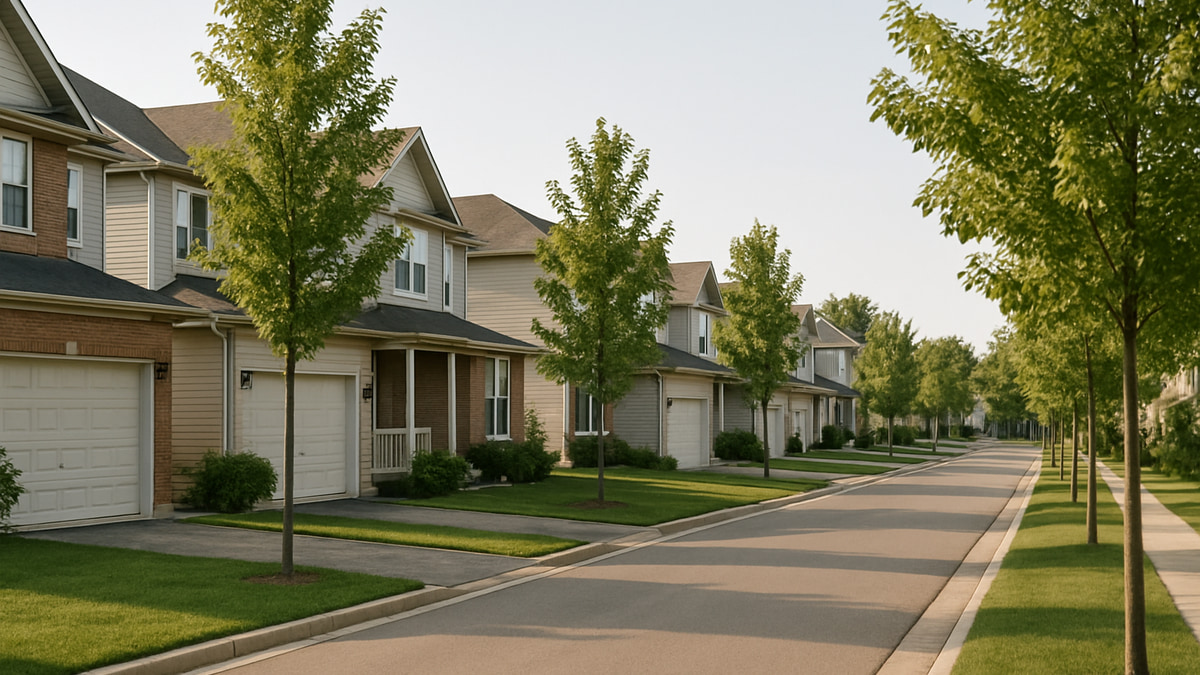
Living in Barrhaven, Ontario means settling into one of Ottawa's most family-oriented planned suburbs, a community that spans entry-level townhomes, mid-range detached homes, and above-average executive properties, all on the quieter southwest side of the city. For buyers relocating to the Ottawa area, Barrhaven consistently ranks as one of the most practical and livable choices, offering strong schools, direct access to Highway 416, and a genuine neighbourhood identity across each of its distinct pockets.
What Kind of Community Is Barrhaven?
Barrhaven is Ottawa's largest planned family suburb, a self-contained community in the city's southwestern corner, built steadily over the past three decades with its own schools, retail corridors, recreation centres, and green space. It sits roughly 20 minutes from downtown by car via Highway 416, and the pace of daily life is calm and residential, with a strong neighbourhood identity in each pocket of the district.
The community attracts a wide mix of residents: families with school-age children, government employees looking for more space than central Ottawa offers, newcomers to Canada drawn by a welcoming and multicultural environment, and downsizers who want single-storey or low-maintenance living in a quieter setting. What ties these groups together is the appeal of average to above-average amenities at a price point that still represents real value within the Ottawa market.
Chapman Mills Marketplace along Strandherd Drive anchors much of the day-to-day retail, with grocery stores, restaurants, pharmacies, and big-box options all within a short drive or bike ride. The Jock River runs through the western edge of the community, and an extensive network of parks, multi-use trails, soccer fields, and conservation areas gives Barrhaven a distinctly outdoorsy feel without ever being far from modern conveniences.
Barrhaven Neighbourhoods: Which One Fits You?
Living in Barrhaven means choosing among several distinct sub-communities, each with its own character. The table below gives a quick overview; the paragraphs that follow add more detail.
| Sub-Community | Primary Home Types | Price Tier | Best Suited For |
|---|---|---|---|
| Chapman Mills / Davidson Heights | Townhomes, detached two-storeys | Mid-range | Families wanting walkable convenience |
| Half Moon Bay | Newer builds, townhomes, entry detached | Entry to mid-range | First-time buyers, young households |
| Stonebridge | Executive detached, larger lots | Above-average | Professionals, retirees, move-up buyers |
| Old Barrhaven | Bungalows, split-levels, two-storeys | Average | Buyers preferring character over new construction |
| Longfields | Mixed townhomes and detached | Mid-range | Commuter households, school-catchment buyers |
Chapman Mills and Davidson Heights sit at the heart of the action. Newer townhomes and detached two-storeys are most common here, typically in the mid-range price tier for Barrhaven. Proximity to the Strandherd Transitway station, elementary schools, and the main shopping strip makes this a go-to for families who want walkable convenience.
Half Moon Bay is one of the fastest-growing corners of Barrhaven. Buyers here find newer townhomes and detached homes with energy-efficient features, open-concept layouts, and family-friendly street design, making it one of the more active areas for Barrhaven new homes and townhomes on the market. It appeals particularly to first-time home buyers in Ottawa and young households entering the market, with a mix of townhomes and entry-level detached homes. If a newer build in this area is on your radar, our new construction vs resale guide is worth a read before you tour.
Stonebridge occupies the upper end of the Barrhaven price spectrum. Built around the Stonebridge Golf Club, it features executive detached homes with stone exteriors, larger lots, and upgraded finishes. This is above-average Barrhaven: more space, more polish, and a correspondingly higher price point. Professionals and retirees make up a notable share of buyers in this pocket, and recently sold homes in Barrhaven show the price gap between Stonebridge and the rest of the district clearly.
Old Barrhaven (sometimes called Cedargrove, Knollsbrook, or Pheasant Run depending on the block) is the mature, established core. Bungalows, split-levels, and two-storeys on larger lots line quieter streets with mature trees. Values here are generally in the average range for the district, and the neighbourhood appeals to buyers who prefer character over new construction.
Longfields offers a mid-range, transit-friendly option. Its proximity to OC Transpo bus connections and the Longfields-Davidson Heights Secondary School makes it popular with commuter households and families who prioritize school catchments.
Barrhaven Real Estate: What Buyers Should Know Right Now
Barrhaven's housing market is currently balanced, with slightly more time on the market than in previous years, a shift that gives today's buyers meaningful opportunity to negotiate and plan carefully.
In the twelve months ending June 20, 2026, there were 1,284 homes sold across Barrhaven's 11 neighbourhoods, with an average sale price of $666,507, down a modest 0.23% year over year. Homes averaged 35 days on the market, up from 31 days the prior year. These figures reflect MLS® data compiled through the Ottawa Real Estate Board's MLS® System for Barrhaven's neighbourhoods, as of June 20, 2026.
For broader context, the Ottawa Real Estate Board's July 2026 market statistics show a composite MLS® benchmark price of $634,000 for Ottawa, with single-family home benchmarks at $725,000, townhouse benchmarks at $542,500, and apartment benchmarks at $385,500. Ottawa sits at 3.5 months of inventory in July 2026, firmly within balanced-market territory, well below the volatility seen in Canada's most expensive cities. For a current read on local conditions, current Barrhaven listings are updated regularly.
What does this mean for a buyer specifically considering living in Barrhaven? A few practical takeaways:
- Entry-level options in Half Moon Bay and Longfields (typically townhomes and stacked condos) tend to come in below the district average, an accessible starting point for first-time buyers.
- Mid-range detached homes in Chapman Mills and Davidson Heights cluster around the district average, generally offering three or four bedrooms with an attached garage.
- Upper-tier properties in Stonebridge can push well above the district average, reflecting the larger lot sizes, golf course adjacency, and custom finishes.
Buyers working with a defined budget and school catchment in mind will want to map those two factors together early, since neighbourhood boundaries in Barrhaven do affect which school a child attends.
Running the numbers with a mortgage professional before booking tours is a useful early step, and our buyer services guide walks through what that process looks like.
Schools in Barrhaven
Barrhaven is served by four school boards: English public (OCDSB), English Catholic (OCSB), French public (CEPEO), and French Catholic (CECCE), giving families more board options within a single suburb than most Ottawa communities offer. In plain terms, buyers have public, Catholic, French public, and French Catholic choices, often within walking distance of newer subdivisions.
- Ottawa-Carleton District School Board (OCDSB), English public
- Ottawa Catholic School Board (OCSB), English Catholic
- Conseil des écoles publiques de l'Est de l'Ontario (CEPEO), French public
- Conseil des écoles catholiques du Centre-Est (CECCE), French Catholic
Notable schools include:
- John McCrae Secondary School and Longfields-Davidson Heights Secondary School, the two main OCDSB high schools serving most of the district's public-stream students
- St. Joseph High School and St. Mother Teresa High School, the principal OCSB secondary schools
- Multiple French-language elementary and secondary schools for families in either French system
For buyers with children, it is worth confirming which catchment a specific property falls into before making an offer, as boundary lines within Barrhaven can be granular.
Getting Around: Transit and Commuting from Barrhaven
Barrhaven connects to downtown Ottawa via OC Transpo's rapid bus Transitway network and Highway 416, with an O-Train west extension under construction for Ottawa's broader west end. The Strandherd and Fallowfield Transitway stations provide express bus routes that make the downtown commute manageable without a car.
Highway 416 runs along the eastern boundary of Barrhaven, connecting directly to Highway 417 and providing fast access north to downtown Ottawa and south toward Brockville and the Thousand Islands region. For buyers whose employers or family connections extend along the 416 corridor, Barrhaven's position is a distinct geographic advantage: the drive south toward the Ottawa-Brockville corridor is direct and largely free of urban congestion once past the city limits.
OC Transpo's O-Train West extension is extending Line 1 to Algonquin Station and introducing a new Line 3 to Moodie Station, adding 15 kilometres of rail and 11 new stations to Ottawa's west end. The original target was a summer 2027 opening; however, severe flooding on July 1, 2026 caused significant damage to tracks, ballast, and electrical equipment at the Moodie Station area. As of August 2026, the City of Ottawa has commissioned an external assessment of the revised schedule, with results expected in early 2027, meaning a firm updated opening date is not yet confirmed (CBC News, August 2026).
While the nearest new stations are not in Barrhaven itself, the broader network improvement is expected to improve bus-to-rail transfer connections for Barrhaven-based riders once the system opens. Buyers should treat any specific opening date as tentative until the City publishes a revised timeline.
For drivers, the typical commute from central Barrhaven to Parliament Hill runs approximately 25–35 minutes outside of peak congestion windows.
Lifestyle, Parks, and Recreation in Barrhaven
Barrhaven's recreational core is anchored by the Chapman Mills Conservation Area along the Jock River and the Minto Recreation Complex, offering trail walking, hockey, swimming, and year-round community programming. The Jock River corridor is a favourite for cycling and wildlife viewing through all four seasons, and the network of parks, soccer fields, and multi-use paths gives the district a genuinely outdoorsy character.
For everyday rhythm, the Strandherd Drive commercial corridor covers most household needs: grocery chains, pharmacies, banks, restaurants ranging from quick-service to sit-down, and a growing selection of specialty shops. Weekend routines often include the Barrhaven Farmers Market during warm months, community soccer and baseball leagues, and informal social events tied to school and neighbourhood associations.
The district is also genuinely family-social in character. Block-level community associations are active, residents tend to stay for years rather than move on quickly, and the mix of long-time homeowners and newer arrivals creates a sense of stability that many buyers find reassuring.
Is Barrhaven a Good Place to Live? Honest Pros and Cons
For most families and relocators, yes: Barrhaven consistently delivers on its core promises of school access, parkland, highway connectivity, and community stability, with a few trade-offs that are common to suburban living anywhere.
Where Barrhaven delivers:
- Value relative to central Ottawa. For buyers comparing living in Barrhaven with similar-sized homes in Westboro or Centretown, the space-per-dollar equation typically favours Barrhaven at current price levels.
- School density. Four board options, multiple secondary schools, and newer schools built alongside recent subdivisions mean families rarely have to compromise.
- Community feel. Planned neighbourhoods with parks, paths, and schools within walking distance give Barrhaven a cohesive, livable design that many buyers appreciate.
- Highway access. Direct on-ramps to Highway 416 make regional travel efficient, whether toward downtown Ottawa or south toward Brockville.
Where Barrhaven requires trade-offs:
- Transit, today. While rapid bus service is solid and improving, Barrhaven is not currently on the O-Train line. Buyers without cars should factor in current bus commute times to downtown, and treat the western O-Train extension's opening as a future benefit with an uncertain timeline following the July 2026 flood damage.
- Car dependency for some trips. Walkability scores vary significantly by sub-neighbourhood. Half Moon Bay and some newer builds are farther from retail than Chapman Mills, making a vehicle practical for most households.
- Distance from downtown culture. The restaurant scene, arts venues, and entertainment clusters of downtown Ottawa or the Glebe are a 20–30 minute drive. Barrhaven has grown its own amenity base, but it is a suburban environment by design.
Living in Barrhaven: Key Takeaways for Buyers
Barrhaven offers entry-level options for first-time buyers, a solid mid-range price point across the bulk of the district, and above-average finishes and lot sizes in its higher-end pockets. The current balanced market, with homes averaging 35 days on the market and modest year-over-year price movement, gives buyers in 2026 more time and more negotiating room than the rushed conditions of earlier years. The combination of school quality, parkland, highway access, and a planned transit future makes it one of the Ottawa region's most consistently appealing choices for families and relocators.
If Barrhaven is at the top of your list, the next practical step is understanding exactly which neighbourhood fits your priorities, and what the current inventory looks like in your budget range. Barrhaven homes for sale across all price tiers are searchable by neighbourhood and property type.
Frequently Asked Questions About Living in Barrhaven
- Is Barrhaven an affordable place to buy a home in Ottawa? Barrhaven sits in the mid-range of the Ottawa market. In the twelve months ending June 2026, the average sale price across Barrhaven's 11 neighbourhoods was $666,507, according to MLS® data. Entry-level townhomes and stacked condos come in below that figure, while executive detached homes in higher-end sub-neighbourhoods like Stonebridge can be well above it. Compared with more central Ottawa communities, Barrhaven typically offers more square footage for a similar price.
- How long does it take to commute from Barrhaven to downtown Ottawa? By car via Highway 416, most Barrhaven residents reach downtown Ottawa in 25–35 minutes outside of peak rush hours. By OC Transpo rapid transit bus, the commute takes longer depending on the route and transfer points, but express service from the Strandherd and Fallowfield Transitway stations reduces travel time significantly compared to local bus routes.
- What school options are available in Barrhaven? Barrhaven is served by four school boards: the Ottawa-Carleton District School Board (English public), the Ottawa Catholic School Board (English Catholic), and the two French-language boards covering public and Catholic streams. Secondary options include John McCrae Secondary School and Longfields-Davidson Heights Secondary School for the public English stream, and St. Joseph High School and St. Mother Teresa High School for the Catholic English stream.
- Is Barrhaven good for families? Barrhaven is consistently cited as one of Ottawa's most family-friendly suburbs. The combination of school density, planned green spaces, recreation centres, community sports leagues, and quieter residential street design makes it a practical and enjoyable place to raise children. The neighbourhood's stable, long-term resident base also contributes to a cohesive community feel.
- What types of homes are available in Barrhaven? Barrhaven's housing stock ranges from stacked condos and townhomes at the entry level, through mid-range two-storey detached homes with attached garages, up to executive properties on larger lots in Stonebridge. Older bungalows and split-levels are common in the mature sections of the district (Old Barrhaven, Knollsbrook, Pheasant Run), while newer builds with contemporary open layouts are concentrated in Half Moon Bay and the newer phases of Chapman Mills.
- Will the O-Train west extension benefit Barrhaven commuters? The O-Train West extension will add 15 kilometres of rail and 11 new stations to Ottawa's west end, with the nearest stations at Moodie and Algonquin, not within Barrhaven itself. The project's original summer 2027 target has been put in doubt by significant flood damage sustained on July 1, 2026; a revised opening timeline is not expected to be confirmed until early 2027. Once open, the extension is anticipated to improve bus-to-rail transfer options for Barrhaven riders, but the practical commute benefit will depend on transfer patterns at that time.