
Blog > Buying a Home Next to a Farm in Ontario: What the Right-to-Farm Law Means for You
Buying a Home Next to a Farm in Ontario: What the Right-to-Farm Law Means for You
by
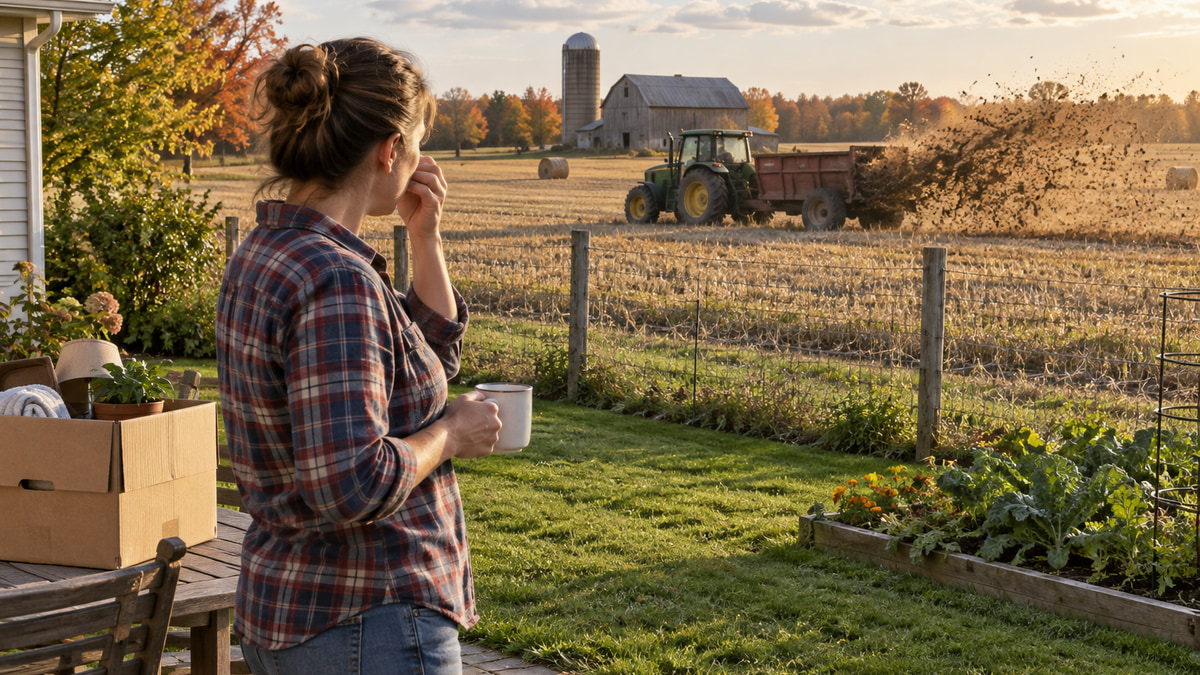
If you buy a home beside a working farm in Ontario, the law is built to protect normal farming. Under the Farming and Food Production Protection Act, 1998, a farmer who is following normal farm practices is protected from nuisance complaints about odour, noise, dust, light, vibration, smoke and flies.
You can still raise a concern, and there is a real process for it, but the question it answers is whether the practice is normal, not whether it bothers you. So the time to find out what living next to that farm is like is before you buy, not after.
What Ontario's right-to-farm law actually says
Ontario's rules for farm and neighbour disputes come from the Farming and Food Production Protection Act, 1998. The province describes it as protecting farmers who follow normal farm practices from nuisance complaints about seven things: odour, noise, dust, light, vibration, smoke and flies.
A normal farm practice is one carried out in a way that is consistent with proper and acceptable customs and standards for that kind of farming, or that uses newer technology in line with proper advanced farm management practices. In plain terms, if the farm next door is doing what a reasonable farm of that type does, the smell of manure in spring or the sound of equipment at harvest is not something you can make go away by complaining.
That is the part buyers coming from the city often do not expect. In a subdivision, a neighbour making a lot of noise at 11 p.m. is a by-law problem. Next to a farm, the same noise during harvest may simply be farming.
What the law covers, and what it doesn't
Here is the quick version of where the protection starts and stops, based on the province's own summary of the Act.
| Issue | Where the law lands | What it does not settle for you |
|---|---|---|
| Odour, noise, dust, light, vibration, smoke and flies from farming | Protected from nuisance claims when the farm is following a normal farm practice | Whether a particular practice, at that location, is actually normal. That is what the Board decides. |
| Manure spreading, harvest work and early or late field hours | Generally part of farming, so long as it is done in line with accepted customs and standards | How often, how close and at what hours you will notice it. Visiting at the right time of year tells you more than any listing. |
| Municipal by-laws | A by-law cannot restrict a normal farm practice | Whether a specific by-law conflict applies. That also goes through the same ministry and Board process. |
| Environmental laws | Not covered. The Act does not let a farm break the Environmental Protection Act or similar laws | Suspected environmental violations go to the province's environmental regulators, not the Board. |
The key line is the first one. The protection is not a blank cheque. It applies to normal farm practices, and whether something is normal depends on the practice and the location.
If a problem comes up after you move in
The process is set out by the province and by the Normal Farm Practices Protection Board, and it runs in steps.
- Talk to the farmer first. Many issues, like the timing of an activity or where equipment is parked, can be sorted out directly between neighbours.
- Call Ontario's agriculture ministry. Its Agricultural Information Contact Centre, at 1-877-424-1300, is the next step. Ministry staff try to resolve the issue between the two sides.
- Apply to the Normal Farm Practices Protection Board. If it still is not resolved, you can apply for a hearing. The Board says this conflict resolution step through the ministry has to happen before an application will be considered, and that it does not charge participants for hearings.
After a hearing, the Board can decide the practice is normal and dismiss the application, decide it is not normal and order the farmer to stop, or find it would be normal with specific changes and order those changes. The Board also notes that its decisions are specific to the location and circumstances, so the same practice can be ruled normal on one farm and not on another.
A hearing is not a reset button. Even if it goes your way, the likely result is a change to one practice, not a quieter or less smelly neighbour overall.
If there is a specific activity you already know you could not live with, treat that as a reason to keep looking, not a problem to fix after closing. For anything that looks like pollution rather than ordinary farming, the right people to talk to are the province's environmental regulators and, if you need advice on your rights, a lawyer.
The other farm rule that can affect your plans
The right-to-farm law is about living next to a farm. A separate set of provincial setbacks, called Minimum Distance Separation, or MDS, can affect what you are allowed to build or create near one.
According to the province, MDS I applies when new development is proposed near existing livestock barns, manure storages or anaerobic digesters, and MDS II applies when a livestock facility is built or expanded near existing development. The purpose is to reduce land use conflicts and odour concerns. Municipalities are responsible for applying these setbacks in land use planning and, depending on the situation, in building permit reviews.
For a buyer, this matters if your plans for the property go beyond living in the house as it is. If you are thinking about severing a lot, building a new home on vacant land or adding another dwelling, ask the township's planning or building department how MDS applies to that property before you firm up, not after.
What to check before you buy next to a farm
This is the part where a little homework goes a long way. When I am working with a buyer looking at country properties, these are the questions worth answering before the offer is firm:
- What kind of farm is it? A hay or cash crop field and a livestock operation with a barn and manure storage are very different neighbours. Look at what is actually there, not just the zoning.
- Where are the barns and manure storage? Note which way they sit from the house and the outdoor living space. Distance and prevailing wind both matter.
- Visit more than once. One sunny showing tells you very little. If you can, go back at a different time of day, and keep in mind that spring and fall field work and harvest are when activity tends to be most noticeable.
- Talk to the neighbours. People who already live on the road will usually tell you what a normal week sounds and smells like.
- Ask the township about your plans. If you want to build, sever or add a second dwelling, ask how zoning and MDS apply to that lot before you commit.
- Think about the rest of the rural package. A farm next door often comes with a well, a septic system and no natural gas line. I covered those in wells and septic systems in Eastern Ontario and heating a home off the gas grid.
Why this comes up so often in Eastern Ontario
A lot of the homes buyers look at between Ottawa and Brockville sit right on the edge of active farmland. That includes rural Ottawa, North Grenville around Kemptville, and townships like Elizabethtown-Kitley outside Brockville. Some are severed lots with a house, a big yard and a working field on two or three sides.
For a lot of buyers that is exactly the appeal. The open view is part of what they are paying for. It just helps to understand that the field is a business, not a park, and that Ontario law is set up to keep that business running. Buyers who go in knowing that tend to be much happier with the move.
Looking at a country property between Ottawa and Brockville and wondering what the farm next door will mean day to day?
Send me the listing, and I can help you work out what to look at and what to ask before you make an offer. Get in touch. No pressure either way.
Sources: Government of Ontario, The Farming and Food Production Protection Act, 1998 and nuisance complaints (updated May 2026) and Publication 853: The Minimum Distance Separation (MDS) Document (updated July 2026); Normal Farm Practices Protection Board, Citizen's Guide to the Board. All read in October 2026.
This is general information about buying property in Ontario as of October 2026, not legal advice. For a specific dispute or a specific property, the provincial agriculture ministry, your township and your real estate lawyer are the right people to confirm how the rules apply.